EN
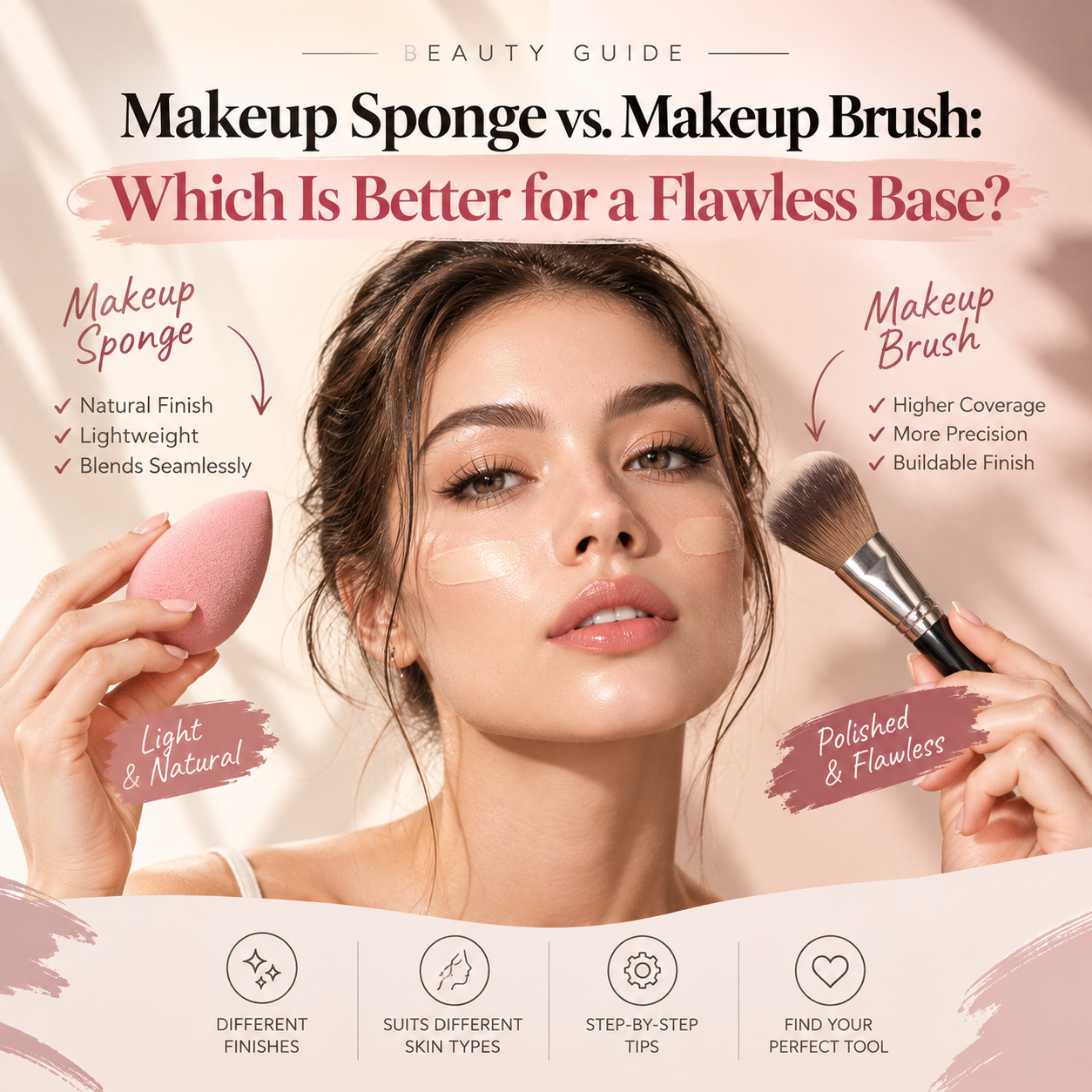
Creating a smooth makeup base is about more than choosing the right foundation. The tools you use can also affect coverage, texture, blending, and the final finish. Two of the most popular options are makeup sponges and makeup brushes, but which one is better for your routine?
Whether you prefer lightweight everyday makeup or fuller coverage for special occasions, understanding the differences between these tools can help you achieve your desired look.
In this guide, we compare makeup sponges and makeup brushes, explain how to use them with different complexion products, and share practical tips for beauty shoppers and wholesale buyers.
1. What Is the Difference Between a Makeup Sponge and a Makeup Brush?
Makeup sponges and brushes both help apply and blend complexion products, but they work in different ways.
Makeup Sponge
A makeup sponge is a soft applicator commonly used to blend liquid foundation, concealer, and cream makeup products.
When used with a suitable technique, a sponge can help create a seamless finish by pressing and blending product into the skin. A slightly damp sponge may provide a fresh, natural-looking result, depending on the product formula and sponge material.
Makeup sponges are especially useful for:
Blending liquid and cream foundation.
Softening visible makeup edges.
Applying concealer around the nose and under the eyes.
Building coverage gradually with a dabbing motion.
Creating a natural-looking base for everyday makeup.
Explore the HEREIAM Face Makeup Collection to find complexion products that can be incorporated into your makeup routine.
Makeup Brush
A makeup brush uses bristles to distribute and blend makeup. Different brush shapes and densities are designed for different purposes, from applying foundation to blending powder and contour products.
Brushes are useful for:
Building coverage with liquid or cream foundation.
Applying loose or pressed powder.
Blending blush and contour.
Applying highlighter to targeted areas.
Creating more controlled placement and definition.
The best brush depends on the formula, bristle density, and shape. A dense brush can provide more coverage, while a softer, fluffier brush is often useful for applying powder lightly.
2. Which Tool Is Better for Liquid Foundation?
Both sponges and brushes can work well with liquid foundation. The right choice depends on your preferred coverage and finish.
Choose a Makeup Sponge for a Natural Finish
A slightly damp makeup sponge can help blend foundation into a natural-looking layer. Use a pressing or bouncing motion instead of dragging the sponge across the skin.
This technique can be useful when you want a soft finish with less visible streaking. However, sponges may absorb some foundation, so the amount used can vary depending on the sponge's material and how wet it is.
Choose a Makeup Brush for More Coverage
A foundation brush can help distribute product efficiently and build coverage in specific areas. Use small circular or stippling motions according to the brush design and foundation formula.
If you notice streaks, blend gently with a clean brush or finish with a sponge to soften the edges.
Can You Use Both?
Yes. Some makeup routines combine the two tools. A brush can be used to distribute foundation across the face, followed by a sponge to blend areas that need extra smoothing.
The most important factors are choosing a suitable foundation formula, applying thin layers, and blending thoroughly.
For example, an oil-free liquid foundation may suit people who prefer a lightweight complexion product. You can explore the HEREIAM Oil-Free Liquid Foundation and select an application method based on the finish you want.
3. Makeup Sponge vs. Makeup Brush for Concealer
Concealer is often applied to smaller areas, such as under the eyes, around the nose, or over individual blemishes. Both tools can work well, but each offers a different level of control.
Using a Makeup Sponge
A small sponge or pointed sponge tip can help blend concealer around the nose and under the eyes. Use gentle tapping motions to avoid moving too much product.
For under-eye makeup, apply a small amount first and add more only where needed. This can help reduce the appearance of heavy or cakey makeup.
Using a Makeup Brush
A small concealer brush can offer more precise placement, especially when covering small blemishes or defining the edges of a makeup look.
After applying concealer, blend the edges without removing too much coverage from the targeted area.
A Practical Combination
For a balanced result, apply concealer with a small brush and gently blend the edges with a sponge. You do not need to use both tools every time; choose the method that feels easiest and gives you the finish you prefer.
4. Which Tool Is Better for Powder, Blush, and Contour?
Not every makeup product is best applied with a sponge.
Pressed and Loose Powder
Brushes are often convenient for applying powder over larger areas. A fluffy brush can distribute a light layer, while a denser brush can provide more concentrated application.
A sponge or powder puff may be useful when you want to press powder onto selected areas, particularly where makeup tends to crease or become shiny.
For a natural result, start with a small amount of powder and build coverage only where necessary.
Blush
A brush is a versatile choice for powder blush because it allows you to blend color gradually across the cheeks.
A sponge can also work with certain cream or liquid blush formulas. Use gentle tapping motions to blend the color without disturbing the foundation underneath.
Contour and Highlighter
Brushes can provide controlled placement for contour and highlighter, especially when you want to define cheekbones or add brightness to specific areas.
A sponge can soften harsh edges after application, helping create a more seamless transition between complexion products.
The ideal tool depends on the product's texture and the finish you want to achieve.
5. How to Choose a Makeup Sponge
If you prefer using a sponge, consider its shape, material, softness, and intended use.
Shape
Teardrop shape: A versatile option for blending foundation across the cheeks and forehead, with the tip helping reach smaller areas.
Angled shape: Useful for working around the nose and other areas that benefit from a flatter edge.
Small pointed shape: Suitable for detailed blending around the eyes and nose.
Different shapes can serve different purposes, so some makeup users prefer keeping more than one sponge in their collection.
Material
The material affects softness, flexibility, absorption, and how the sponge feels during application.
If you have a latex sensitivity, look for products clearly labeled as latex-free and review the manufacturer's material information. Do not assume that every makeup sponge is made from the same material.
Wet or Dry Application
Some makeup sponges can be used both wet and dry, but always check the product instructions.
Damp application: May help create a fresh, blended finish with many liquid or cream formulas.
Dry application: Can be useful for certain powder products or when the applicator is specifically designed for dry use.
If the sponge is designed for damp use, wet it thoroughly and squeeze out excess water before applying makeup. It should be damp, not dripping.
6. How to Clean and Maintain Makeup Tools
Cleaning your makeup tools regularly is an important part of a good beauty routine. Product residue, oil, and dirt can accumulate on tools with repeated use.
Cleaning a Makeup Sponge
Wet the sponge with lukewarm water.
Apply a suitable cleanser designed for makeup tools.
Gently squeeze and release the sponge to loosen makeup residue without pulling or tearing it.
Rinse thoroughly until the water runs clear.
Squeeze out excess water and allow the sponge to dry completely in a well-ventilated area.
Avoid storing a damp sponge in a closed container, where it may remain wet for too long.
Cleaning a Makeup Brush
Wet the bristles while keeping the handle and ferrule as dry as possible.
Gently work in an appropriate brush cleanser.
Rinse thoroughly without soaking the handle.
Reshape the bristles.
Leave the brush flat or with the bristles angled downward while drying.
Clean tools more frequently when used with liquid or cream products, and follow the manufacturer's care recommendations. Replace sponges or brushes when they become damaged, difficult to clean, or show signs of deterioration.
For additional guidance, see the American Academy of Dermatology's advice on how to clean your makeup brushes.
7. Common Makeup Tool Mistakes to Avoid
Even good-quality tools may not deliver the desired result if they are used incorrectly.
Using too much foundation: Applying a thick layer at once can make makeup look heavy. Start with a small amount and build coverage gradually.
Dragging a sponge across the skin: For many foundation formulas, tapping or pressing motions help blend the product more evenly.
Using the same tool for every formula: A brush that works well for powder may not provide the same result with cream blush. Match the tool to the product's texture and instructions.
Skipping cleaning: Product buildup can affect application and tool condition. Clean your tools regularly and let them dry completely.
Ignoring material information: Check product specifications, especially if you have known sensitivities or specific hygiene requirements.
Choosing tools only by appearance: Shape, softness, construction, and ease of cleaning are often more important than color or design.
8. What Should Beauty Retailers and Wholesale Buyers Consider?
For beauty retailers, distributors, and wholesale buyers, makeup tools can complement foundation, concealer, powder, and other complexion products.
A useful product assortment may include:
Latex-free makeup sponges for customers seeking that material option.
Different sponge shapes for full-face application and detailed blending.
Brushes designed for foundation, powder, blush, and contour.
Makeup puffs for powder application and touch-ups.
Clear product instructions covering wet or dry use and cleaning.
When evaluating suppliers, consider material specifications, product consistency, packaging, minimum order quantities, and the needs of your target market. Clear product descriptions help customers understand how each tool should be used.
HEREIAM Cosmetics provides IMAGIC brand stock products for wholesale buyers as well as ODM/OEM customization options. Beauty businesses can explore ready-to-order makeup products while also considering customized product and packaging requirements for their markets.
Final Thoughts
Neither a makeup sponge nor a makeup brush is universally better. Sponges are useful for blending and softening the appearance of liquid and cream products, while brushes offer versatility, coverage control, and precise application.
For many people, keeping both tools available provides the greatest flexibility. Choose based on the makeup formula, desired finish, comfort, and ease of cleaning.
Explore the HEREIAM Cosmetics website for complexion makeup and other beauty products suitable for personal routines, wholesale purchasing, and customization opportunities.
Table of Contents
- 1. What Is the Difference Between a Makeup Sponge and a Makeup Brush?
- 2. Which Tool Is Better for Liquid Foundation?
- 3. Makeup Sponge vs. Makeup Brush for Concealer
- 4. Which Tool Is Better for Powder, Blush, and Contour?
- 5. How to Choose a Makeup Sponge
- 6. How to Clean and Maintain Makeup Tools
- 7. Common Makeup Tool Mistakes to Avoid
- 8. What Should Beauty Retailers and Wholesale Buyers Consider?
- Final Thoughts