EN
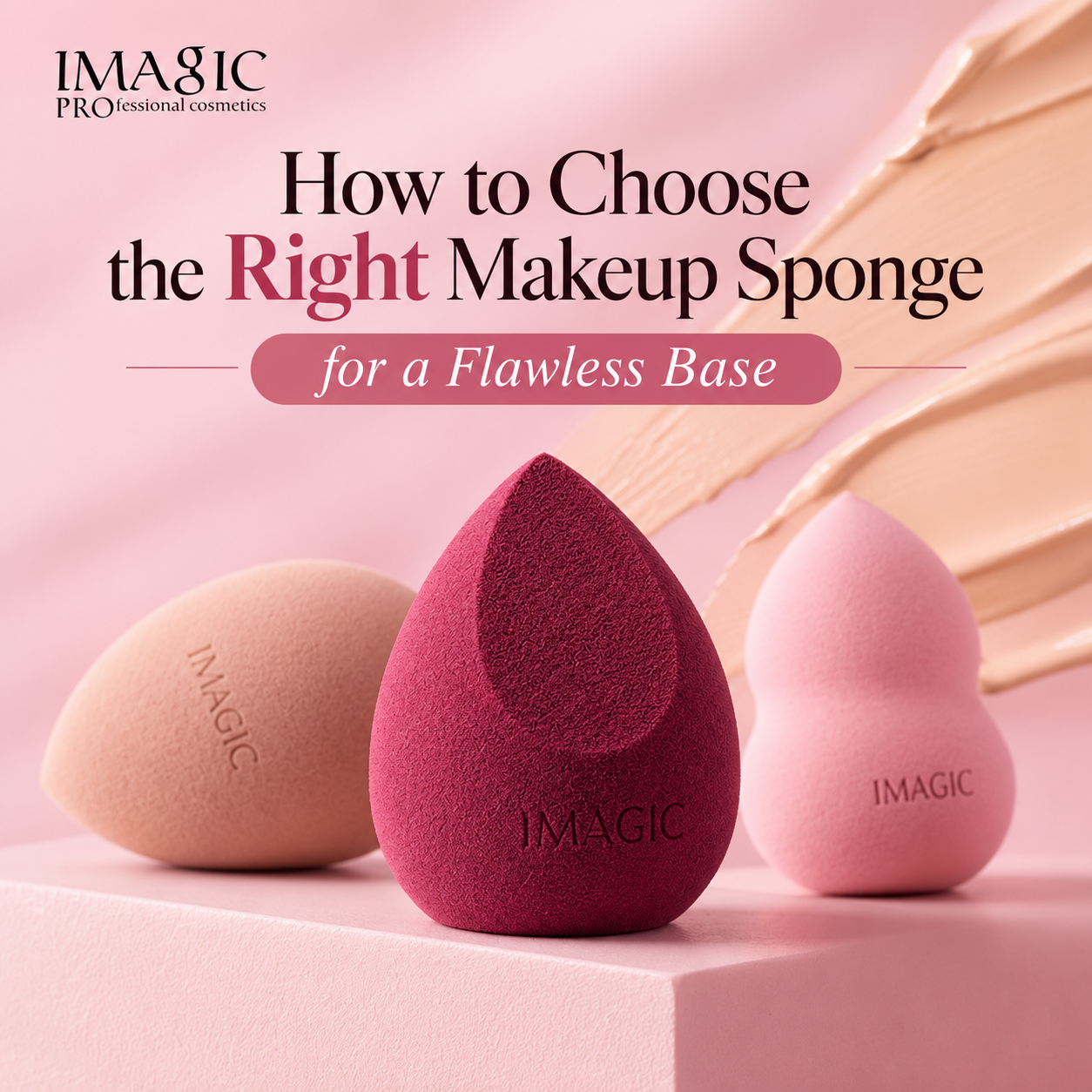
A flawless makeup base starts with more than just the right foundation. The tools you use to apply makeup can also make a big difference. A good makeup sponge helps blend foundation, concealer, and other complexion products smoothly, creating a natural and even finish.
From beginners who want an easy everyday makeup routine to professional makeup artists who need precise application tools, makeup sponges have become an essential part of many beauty collections.
But with different shapes, materials, and textures available, how do you choose the right one?
In this guide, we will explain the different types of makeup sponges, how to use them, and what beauty retailers and wholesale buyers should consider when selecting makeup sponges for their product collections.
1. What Is a Makeup Sponge and Why Use One?
A makeup sponge is a beauty tool designed to apply and blend complexion products, including foundation, concealer, BB cream, and cream blush.
Unlike some makeup brushes, sponges can help create a soft, skin-like finish when used with a suitable technique.
Here are some common benefits:
Seamless blending: Helps blend foundation and concealer without obvious application lines.
Natural-looking coverage: Allows users to build coverage gradually.
Versatile application: Works with many liquid, cream, and selected powder products.
Easy to use: Suitable for beginners and experienced makeup users.
Precise application: Pointed areas can reach around the nose, eyes, and other smaller areas.
The right sponge can help users achieve anything from light everyday coverage to a more polished makeup base.
2. Different Makeup Sponge Shapes and Their Uses
Makeup sponges come in several shapes. Each design offers different advantages depending on the application area and makeup technique.
Teardrop Makeup Sponge
The teardrop shape is one of the most popular designs.
Its rounded bottom is suitable for blending foundation over larger areas of the face, while the pointed tip helps reach smaller areas such as the sides of the nose and under the eyes.
It is a versatile option for everyday makeup routines.
Flat-Edge Makeup Sponge
A flat-edge sponge features one or more flat surfaces that can help press and blend makeup into areas that need more coverage.
It is useful for:
Applying foundation around the cheeks and forehead
Blending concealer
Pressing makeup into the skin
Reaching certain facial contours
Angled Makeup Sponge
An angled sponge has a slanted surface that can help apply and blend makeup around facial contours.
Its shape is useful for working around the nose, cheekbones, and under-eye area.
Mini Makeup Sponge
Mini sponges are smaller versions of regular makeup sponges.
They are designed for detailed application, especially around the eyes, nose, and other hard-to-reach areas.
For customers who enjoy detailed makeup looks, mini sponges can be a useful addition to a makeup tool collection.
3. How to Choose the Right Makeup Sponge Material
The material of a makeup sponge affects its softness, flexibility, water absorption, and overall application experience.
Latex Makeup Sponges
Traditional latex makeup sponges are made with latex-based materials. Their texture and performance can vary depending on their design and manufacturing quality.
However, people with latex allergies or sensitivities should avoid products containing natural rubber latex.
Non-Latex Makeup Sponges
Non-latex makeup sponges are an alternative for customers who prefer latex-free beauty tools.
When selecting a non-latex sponge, consider:
Softness and flexibility
Whether the sponge expands evenly when damp
Its ability to blend different makeup textures
Whether it maintains its shape during normal use
Ease of cleaning and drying
For wholesale buyers, non-latex options can also help expand product choices for customers with different material preferences.
Always check the manufacturer's material information rather than assuming that a product is latex-free based only on its appearance.
4. Should You Use a Makeup Sponge Wet or Dry?
One of the most common questions about makeup sponges is whether they should be used wet or dry.
The answer depends on the product formula and the desired makeup finish.
Using a Makeup Sponge Wet
A damp makeup sponge is commonly used for liquid and cream complexion products.
How to use it:
Wet the sponge with clean water.
Squeeze out excess water.
Use a clean towel to remove additional moisture if necessary.
Apply foundation or concealer using gentle bouncing motions.
A damp sponge may provide a softer, more natural-looking finish and can help distribute liquid foundation more evenly.
Avoid using the sponge while it is dripping wet, as excess water may affect product application.
Using a Makeup Sponge Dry
A dry sponge can be useful when applying certain powder products or when a user wants more concentrated coverage.
It may also be suitable for some specific sponge designs intended for dry application.
Always follow the product manufacturer's instructions, as different sponge materials and formulas may perform differently.
5. How to Use a Makeup Sponge for Different Products
A makeup sponge can be used with several complexion products. The technique should be adjusted according to the formula and the area of application.
Foundation
Apply a small amount of foundation to the back of your hand or directly onto the face.
Use the rounded side of a damp sponge to gently bounce the product across the cheeks, forehead, and chin.
Avoid dragging the sponge across the skin, as bouncing motions generally help create a more even finish.
Concealer
Apply concealer to areas that need additional coverage, such as under the eyes or around blemishes.
Use the pointed tip or a smaller sponge to gently blend the edges without removing too much product.
BB Cream
For a lightweight base, apply a small amount of BB cream and blend it with a damp sponge.
This technique can help create a soft, natural finish suitable for everyday makeup.
Cream Blush
Place a small amount of cream blush on the cheeks and gently tap with the rounded side of the sponge.
Build the color gradually to avoid applying too much product at once.
Setting Powder
Some makeup sponges can also be used to press selected loose or pressed powders into the skin, particularly around areas that need more precise setting.
Use a clean, dry sponge when the product instructions allow this application method.
6. How to Clean and Maintain Your Makeup Sponge
Makeup sponges come into direct contact with foundation, concealer, skin oils, and other cosmetic products. Regular cleaning and proper drying are important parts of maintaining them.
Follow these basic steps:
Wet the sponge with lukewarm water.
Apply a suitable sponge cleanser or gentle cleaning product.
Gently squeeze the sponge to work the cleanser through the material.
Rinse thoroughly until the water runs clear.
Press out excess water without twisting or pulling aggressively.
Allow the sponge to air-dry completely in a clean, well-ventilated area.
Additional tips:
Clean your makeup sponge regularly, especially after frequent use.
Avoid sharing personal makeup sponges.
Do not store a damp sponge in a closed container.
Replace a sponge if it develops persistent odors, visible damage, or changes in texture.
Follow the manufacturer's care instructions.
A clean, dry storage environment helps reduce the chance of unwanted microbial growth.
7. Makeup Sponge vs. Makeup Brush: Which One Should You Choose?
Both makeup sponges and brushes are useful tools, but they offer different application experiences.
| Feature | Makeup Sponge | Makeup Brush |
|---|---|---|
| Main use | Blending and pressing makeup | Applying and distributing makeup |
| Common products | Liquid and cream formulas | Liquid, cream, and powder formulas |
| Finish | Often soft and skin-like | Depends on brush shape and density |
| Coverage | Can build coverage through tapping | Can provide controlled or fuller application |
| Precision | Pointed areas reach smaller areas | Specialized brush shapes offer detailed control |
| Maintenance | Requires thorough washing and drying | Requires regular cleaning and careful drying |
Neither tool is universally better. Many makeup users combine both: brushes for initial application and sponges for blending and refining the finish.
8. What Should Wholesale Buyers Look for When Selecting Makeup Sponges?
For beauty retailers, distributors, and private-label brands, selecting makeup sponges requires attention to product performance, material, packaging, and market demand.
Material and Product Specifications
Confirm the material composition, size, shape, softness, and intended wet or dry application method.
If you are sourcing non-latex products, request clear material specifications from the supplier.
Shape and Product Variety
Different shapes serve different purposes. A product collection can include teardrop, angled, flat-edge, and mini sponges to meet different customer preferences.
Quality and Durability
Before placing a bulk order, evaluate:
Whether the sponge feels soft and flexible
Whether it expands evenly when damp, if designed for wet use
Whether it maintains its shape
Whether the surface has visible defects
Whether it is easy to clean according to the care instructions
Packaging and Customization
For brands developing their own beauty accessories, packaging and branding are important considerations.
Depending on the supplier's capabilities, customization may include:
Brand logo
Sponge colors
Shape and size
Individual packaging
Retail boxes and gift sets
Request samples before confirming a large order so you can evaluate the product and packaging.
9. Explore Makeup Products and Wholesale Opportunities with HEREIAM Cosmetics
A complete cosmetics collection includes both color cosmetics and the beauty tools customers use to apply them.
HEREIAM Cosmetics provides IMAGIC brand stock makeup products for wholesale buyers, as well as ODM/OEM customization services for businesses developing their own cosmetics brands.
Our product range covers face makeup, lip makeup, eye makeup, and beauty accessories. For buyers looking to expand their collections, we offer opportunities to explore different product categories and discuss suitable supply and customization solutions.
Whether you are a distributor, retailer, online beauty seller, or cosmetics brand owner, visit HEREIAM Cosmetics to explore our product range and wholesale cooperation opportunities.
Final Thoughts
The right makeup sponge can help create a smooth and natural-looking makeup base. Shape, material, softness, and application technique all influence the final result.
For everyday users, a versatile sponge can cover many basic makeup needs. For beauty retailers and wholesale buyers, offering different shapes, materials, and packaging options can help serve a wider range of customers.
When choosing a makeup sponge, focus on comfortable application, suitable material specifications, easy maintenance, and reliable product quality.
Table of Contents
- 1. What Is a Makeup Sponge and Why Use One?
- 2. Different Makeup Sponge Shapes and Their Uses
- 3. How to Choose the Right Makeup Sponge Material
- 4. Should You Use a Makeup Sponge Wet or Dry?
- 5. How to Use a Makeup Sponge for Different Products
- 6. How to Clean and Maintain Your Makeup Sponge
- 7. Makeup Sponge vs. Makeup Brush: Which One Should You Choose?
- 8. What Should Wholesale Buyers Look for When Selecting Makeup Sponges?
- 9. Explore Makeup Products and Wholesale Opportunities with HEREIAM Cosmetics
- Final Thoughts