EN
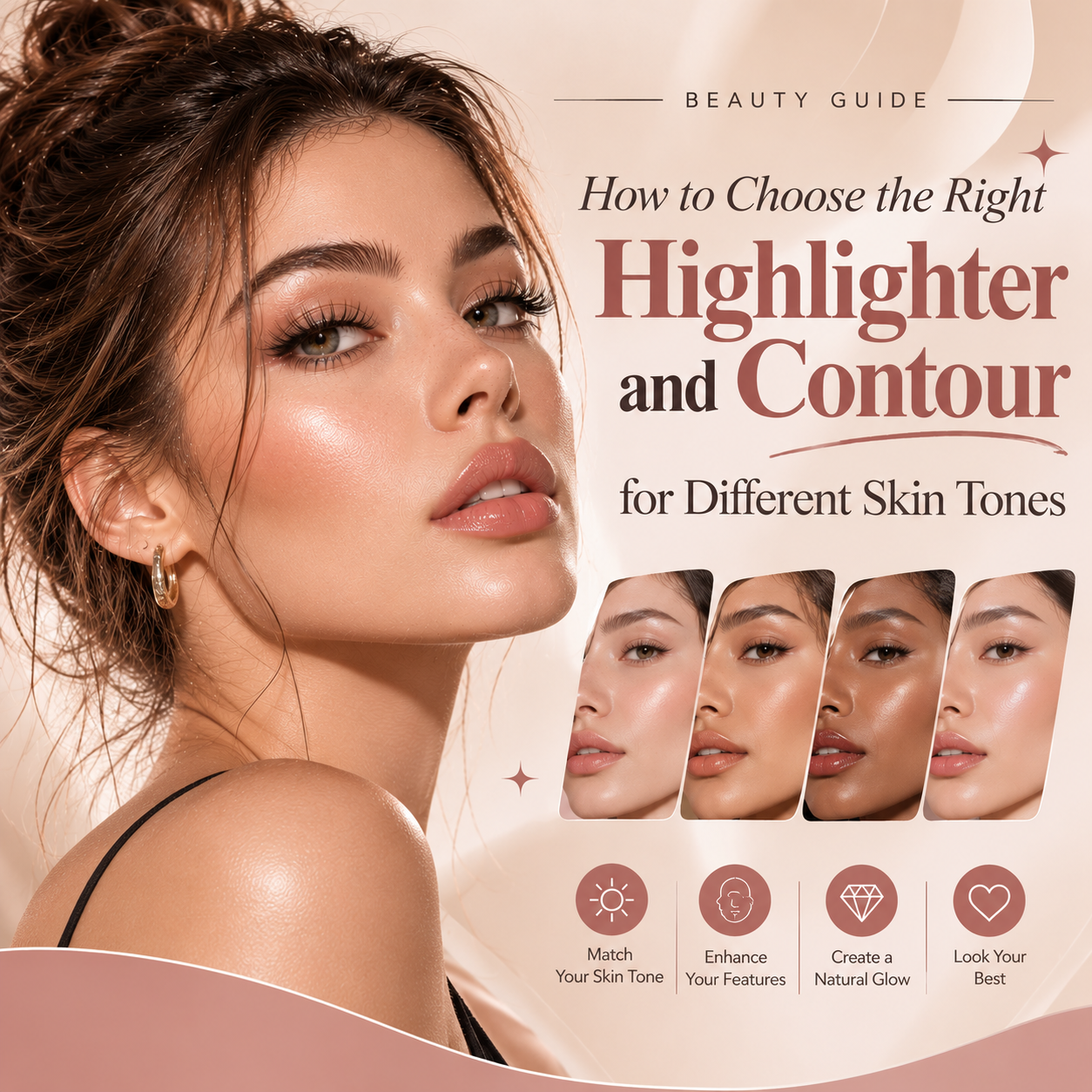
How to Choose the Right Highlighter and Contour for Different Skin Tones
Highlighter and contour are two essential products for creating dimension and definition in makeup. While highlighter brings light to selected areas of the face, contour helps create the appearance of more defined facial features.
From soft everyday makeup to glamorous evening looks, the right combination can enhance natural features without making the makeup look too heavy. However, choosing the right shades and textures is important, especially when working with different skin tones.
In this guide, we will explore how to choose highlighter and contour products for fair, medium, tan, and deep skin tones, explain where to apply them, and share useful tips for beauty retailers and wholesale buyers.
1. What Is the Difference Between Highlighter and Contour?
Although highlighter and contour are often used together, they serve different purposes.
Highlighter reflects light and adds brightness to selected areas of the face. It can create a luminous appearance on the cheekbones, brow bones, nose bridge, and cupid's bow.
Contour uses a shade that appears slightly deeper than the natural skin tone to create the appearance of shadows and definition. It is commonly applied beneath the cheekbones, along the jawline, and around the sides of the forehead.
For a balanced makeup look, contour adds depth while highlighter brings attention to the areas you want to emphasize.
2. How to Choose Highlighter Shades for Different Skin Tones
The best highlighter shade should complement your natural complexion and desired makeup finish.
Fair Skin Tones
Fair skin tones often look flattering with champagne, soft pearl, and light pink highlighters. These shades can add brightness without creating an overly strong contrast.
For everyday makeup, choose a finely milled formula with a subtle glow.
Light to Medium Skin Tones
Light and medium complexions can work well with champagne, peach, and soft golden shades. These colors can create a warm, healthy-looking glow.
Tan and Olive Skin Tones
Golden, bronze, and warm peach highlighters can complement tan and olive complexions. They provide warmth and can look especially beautiful in sun-kissed makeup styles.
Deep Skin Tones
For deeper skin tones, rich gold, bronze, copper, and warm rose shades can create a beautiful luminous effect.
Avoid choosing a highlighter that is too pale, as it may leave an obvious light or ashy cast on the skin.
Tip: Always consider the undertone of your skin. A shade that complements your undertone usually blends more naturally than one selected based only on skin depth.
3. How to Choose the Right Contour Shade
Unlike highlighter, contour is designed to create natural-looking shadows. Therefore, the shade should be deep enough to add definition but not so dark that it looks like an obvious stripe.
Fair Skin
Choose a light neutral or soft cool-toned contour shade. Very dark brown shades may look harsh on fair complexions.
Medium Skin
Medium skin tones often work well with neutral brown or softly warm contour shades. The ideal shade should create definition without looking orange.
Tan and Olive Skin
Warm neutral brown shades can complement tan and olive complexions. Look for a color that adds depth while remaining close to the natural appearance of facial shadows.
Deep Skin
Deep skin tones may require richer, deeper brown shades to create visible definition. The undertone should still look natural against the skin.
A useful approach is to test the contour along the cheekbone area and blend it out. The result should look like a soft shadow rather than a distinct line.
4. Where Should You Apply Highlighter and Contour?
Understanding placement can make a big difference in the final makeup result.
Highlighter Placement
Common highlighting areas include:
Cheekbones: Adds dimension and emphasizes the upper cheek area.
Brow bones: Creates a subtle lifted appearance.
Nose bridge: Adds a touch of brightness.
Cupid's bow: Highlights the shape of the upper lip.
Inner corners of the eyes: Helps create a brighter-looking eye area.
You do not need to highlight every area. Choose the placements that suit your face shape and makeup style.
Contour Placement
Contour is commonly applied to:
Below the cheekbones: Creates the appearance of more defined cheeks.
Jawline: Adds definition along the lower face.
Sides of the forehead: Can visually balance the proportions of the face.
Sides of the nose: Creates a more defined nose appearance when applied lightly.
Use a small amount first and blend gradually. Heavy contour can make the makeup look less natural.
5. Powder vs. Cream Highlighter and Contour: Which Should You Choose?
Highlighter and contour products are available in different textures. Powder and cream formulas each offer different application experiences.
Powder Formulas
Powder highlighters and contours are convenient for beginners and everyday makeup routines.
Benefits include:
Easy to build up gradually
Convenient for layering over powder foundation
Suitable for many makeup styles
Easy to carry in compact palettes
Cream Formulas
Cream formulas can provide a more skin-like finish and are often blended before setting powder.
Benefits include:
Smooth, blendable texture
Suitable for creating softer transitions
Useful for more detailed makeup application
Can work well with liquid or cream foundation
The best option depends on personal preference, skin type, and the overall makeup routine.
6. How to Create a Natural Highlighter and Contour Look
You do not need professional makeup skills to create a balanced result. Follow these simple steps:
Prepare your base: Apply foundation or another complexion product and blend evenly.
Apply contour: Use a small amount beneath the cheekbones and along other selected areas.
Blend carefully: Blend the edges until there are no obvious lines.
Add highlighter: Apply a small amount to the cheekbones and other areas you want to emphasize.
Check the result in natural light: Make sure the highlighter and contour look balanced from different angles.
For daytime makeup, use a light hand. For evening or event makeup, you can gradually increase the intensity.
7. Common Highlighter and Contour Mistakes to Avoid
Even good products may not deliver the desired effect if they are used incorrectly.
Choosing a contour that is too dark: This can create harsh lines instead of natural-looking shadows.
Using a highlighter with the wrong undertone: A shade that clashes with the complexion may look unnatural.
Applying too much product: Heavy application can make the makeup appear overly textured or exaggerated.
Ignoring blending: Smooth transitions are essential for a natural finish.
Using the same placement for every face shape: Facial structure and personal preference should influence where you apply each product.
A little product and careful blending are often enough to achieve a polished result.
8. Why Multi-Color Face Palettes Are Useful for Beauty Retailers
For beauty retailers and makeup wholesale buyers, multi-color face palettes can be a practical product category to explore.
A palette containing several complementary shades can provide multiple makeup options in one package. Depending on the design, it may support highlighting, contouring, and other face makeup applications.
Potential advantages include:
More shade choices for different complexions
Convenient packaging for travel and daily use
Multiple makeup looks from one palette
Attractive options for beauty gift sets
Opportunities for cross-selling with foundation and concealer
For markets with diverse skin tones, offering a suitable range of face makeup shades is especially important. Retailers should consider local customer preferences, preferred finishes, and the shades that best match their target audience.
Explore the HEREIAM Face Makeup Collection for more complexion makeup options.
9. What Should Wholesale Buyers Consider When Sourcing Face Makeup?
When sourcing highlighter, contour, and other face makeup products, wholesale buyers should look beyond appearance alone.
Consider these factors:
Shade Selection: Does the product offer colors suitable for your target market?
Texture and Finish: Are the shades matte, luminous, or a combination of finishes?
Packaging Design: Is the product convenient to display, store, and carry?
Product Versatility: Can customers use the palette for multiple makeup looks?
Supply and Customization: Can the supplier support stock orders as well as ODM/OEM development?
At HEREIAM Cosmetics, buyers can explore IMAGIC brand stock products and HEREIAM makeup offerings. We also support ODM/OEM customization for businesses looking to develop their own cosmetic products and packaging.
Whether you are a distributor, beauty retailer, online store owner, or cosmetics brand, a well-planned face makeup assortment can help you serve a wider range of customers.
10. Final Thoughts
Highlighter and contour help add dimension, brightness, and definition to makeup. The key is to choose shades that complement your skin tone and apply them in a way that enhances your natural features.
Fair, medium, tan, olive, and deep complexions can all benefit from the right combination of shades and textures. With suitable products and careful blending, you can create anything from a subtle daytime glow to a more defined evening makeup look.
For beauty businesses, offering versatile face makeup products and a thoughtful shade selection can help meet the needs of diverse customers.
Discover more makeup products at HEREIAM Cosmetics and explore wholesale opportunities for IMAGIC and HEREIAM cosmetics.
Table of Contents
- How to Choose the Right Highlighter and Contour for Different Skin Tones
- 1. What Is the Difference Between Highlighter and Contour?
- 2. How to Choose Highlighter Shades for Different Skin Tones
- 3. How to Choose the Right Contour Shade
- 4. Where Should You Apply Highlighter and Contour?
- 5. Powder vs. Cream Highlighter and Contour: Which Should You Choose?
- 6. How to Create a Natural Highlighter and Contour Look
- 7. Common Highlighter and Contour Mistakes to Avoid
- 8. Why Multi-Color Face Palettes Are Useful for Beauty Retailers
- 9. What Should Wholesale Buyers Consider When Sourcing Face Makeup?
- 10. Final Thoughts