EN
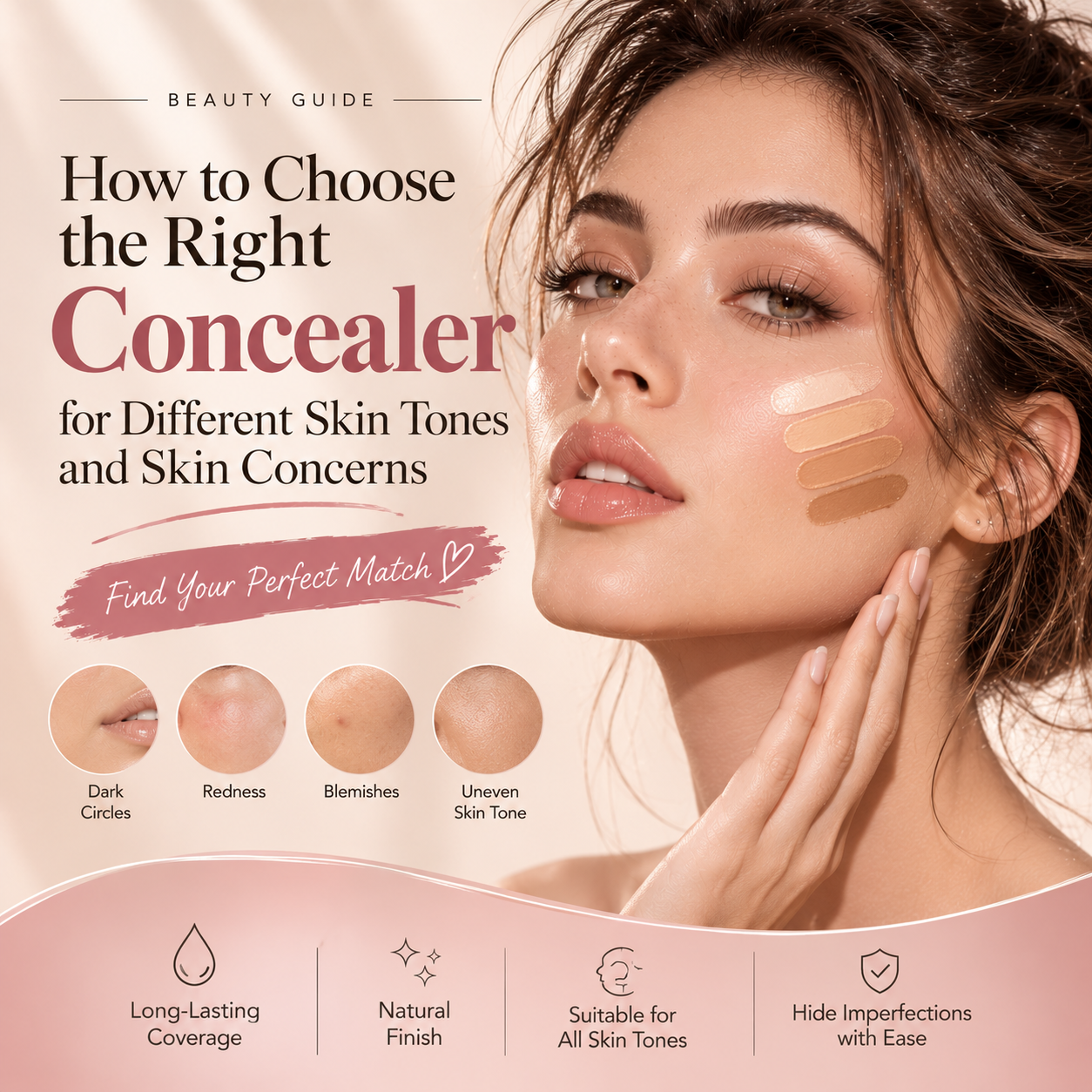
How to Choose the Right Concealer for Different Skin Tones and Skin Concerns
A good concealer can make a big difference in any makeup routine. Whether you want to cover dark circles, reduce the appearance of blemishes, brighten the under-eye area, or create a more even complexion, choosing the right concealer helps you achieve a smoother-looking finish.
However, not every concealer works for every skin tone or skin concern. The right formula, shade, coverage, and texture all play an important role in the final result.
In this guide, we will explain how to choose a concealer based on different skin tones and common skin concerns, share practical application tips, and explore what beauty retailers and wholesale buyers should consider when selecting concealer products.
1. Understand Different Types of Concealer
Before choosing a concealer, it is important to understand the main formulas available.
Liquid Concealer
Liquid concealer is one of the most versatile options. It is easy to blend and comes in different coverage levels, from light to full coverage.
It is suitable for:
Covering dark circles
Concealing minor blemishes
Brightening selected areas
Everyday makeup routines
Cream Concealer
Cream concealer generally has a thicker texture and can provide more concentrated coverage. It is often available in pots, tubes, or multi-shade palettes.
It works well for:
Covering more noticeable discoloration
Concealing spots and uneven areas
Creating a more defined makeup base
Mixing shades to achieve a closer color match
Stick Concealer
Stick concealer is convenient for targeted application. Its solid texture makes it easy to carry and apply directly to selected areas.
It is suitable for:
Quick touch-ups
Covering individual blemishes
Travel makeup kits
On-the-go beauty routines
When choosing a formula, consider your skin type, preferred finish, and the level of coverage you need.
2. Choose the Right Concealer Shade for Your Skin Tone
Shade matching is one of the most important steps when selecting a concealer.
Fair Skin Tones
People with fair skin tones can usually start by looking for shades that closely match their foundation. A slightly lighter shade may be used to brighten the under-eye area, but choosing one that is too pale can create an unnatural contrast.
Light to Medium Skin Tones
Light and medium skin tones often benefit from shades that match their foundation or natural complexion. Depending on the undertone, warm, neutral, and cool shades may create different results.
Tan and Olive Skin Tones
Tan and olive skin tones may need concealers with warmer or golden undertones. Testing the shade in natural light can help avoid a gray or overly ashy appearance.
Deep Skin Tones
For deeper skin tones, choosing a concealer with sufficient depth and the right undertone is essential. Shades that are too light may leave a visible contrast, while a well-matched shade can create a more seamless finish.
A useful tip: Test concealer along the jawline or on the area where you plan to apply it. Check the result in natural lighting whenever possible.
3. Choose Concealer Based on Different Skin Concerns
Different concerns may require different shades and application techniques.
Dark Circles
For dark circles, first consider their undertone. Depending on the individual, dark circles may appear blue, purple, brown, or gray.
A peach or orange-toned corrector may help neutralize certain blue or purple tones, depending on skin depth. Apply a small amount first, then layer a skin-tone concealer if additional coverage is needed.
Blemishes and Acne Marks
For blemishes and post-acne marks, a concealer close to your natural skin tone is often the most practical choice. Apply it precisely rather than spreading a thick layer over a large area.
If the skin is textured, using less product and blending around the edges can help create a more natural-looking finish.
Redness
For visible redness, a green color corrector may help neutralize red tones before applying foundation or concealer. Use a thin layer to avoid leaving a green cast on the skin.
Uneven Skin Tone
If you want to even out areas of discoloration, choose a concealer that blends naturally with your complexion. A lightweight formula may be sufficient for mild unevenness, while more noticeable discoloration may require buildable coverage.
4. How to Apply Concealer for a Smooth, Natural Finish
Choosing the right product is only part of the process. Application technique also affects the result.
Follow these simple steps:
Prepare your skin: Start with clean, moisturized skin. Allow skincare products to settle before applying makeup.
Apply foundation first if needed: Foundation can even out the complexion, helping you identify which areas still need extra coverage.
Use a small amount: Begin with a thin layer of concealer and add more only where necessary.
Blend gently: Use a makeup sponge, brush, or fingertip to blend the edges without removing too much coverage.
Set selectively: If needed, apply a small amount of setting powder to areas where concealer tends to crease or move.
For the under-eye area, avoid applying too much product. A thin, well-blended layer often looks smoother than several thick layers.
5. How to Choose Concealer for Different Skin Types
Skin type can influence how a concealer looks and feels throughout the day.
Dry Skin
Dry skin may benefit from creamy or hydrating formulas that blend smoothly. Avoid applying excessive powder over dry areas, as it may emphasize texture.
Oily Skin
For oily skin, lightweight formulas with a suitable long-wearing finish may be more comfortable. Setting the T-zone lightly can help reduce unwanted shine.
Combination Skin
Combination skin may need different application techniques across the face. Use a more comfortable formula for dry areas and set oilier areas only when necessary.
Sensitive Skin
People with sensitive skin should check the ingredient list, follow product directions, and consider testing a new cosmetic on a small area before regular use. Discontinue use if irritation develops.
No single formula works for everyone, so personal preference and skin response should always guide the final choice.
6. Why Multi-Shade Concealer Palettes Are Useful
For makeup enthusiasts, makeup artists, and beauty retailers, multi-shade concealer palettes offer additional flexibility.
A palette containing several shades can help users:
Match different skin tones
Mix two or more shades for a closer match
Adjust coverage for different areas of the face
Create subtle highlighting and contouring effects
Build a versatile makeup kit
For professional makeup artists, having multiple shades in one palette can be especially useful when working with clients who have different complexions.
For retailers and wholesale buyers, multi-shade palettes can also appeal to customers who prefer a versatile product rather than purchasing several individual concealers.
Explore the HEREIAM Face Makeup Collection to discover more complexion makeup options.
7. Concealer and Foundation: How to Make Them Work Together
Concealer and foundation serve related but different purposes.
Foundation helps create a more even-looking base across the face, while concealer provides additional coverage in selected areas.
For a natural everyday look:
Apply a thin layer of foundation first.
Identify areas that still need coverage.
Apply concealer only where necessary.
Blend the edges into the foundation.
Set selected areas with powder if needed.
If you prefer a more complete complexion routine, explore the HEREIAM Luminous Concealer Foundation, which offers another option for building a more even-looking makeup base.
8. Concealer Products: What Should Wholesale Buyers Consider?
As consumers become more aware of shade matching and complexion diversity, concealer selection is an important consideration for cosmetics retailers and distributors.
When sourcing concealer products, wholesale buyers may want to evaluate the following factors:
Shade Range: A selection that includes fair, medium, tan, and deep shades can help retailers serve a wider customer base.
Formula Options: Different textures and coverage levels give customers more flexibility when choosing products.
Packaging and Portability: Compact packaging can be convenient for daily use, travel, and professional makeup kits.
Product Positioning: Consider whether the product is intended for everyday consumers, professional makeup artists, or customers looking for higher coverage.
Customization Options: Businesses developing their own makeup lines may also consider ODM/OEM services for product development and packaging customization.
At HEREIAM Cosmetics, wholesale buyers can explore IMAGIC brand stock products and HEREIAM makeup offerings, with ODM/OEM customization support for businesses interested in developing their own product lines.
Our goal is to provide flexible makeup sourcing options for distributors, retailers, online beauty stores, and international brand owners.
9. Final Thoughts
Choosing the right concealer involves more than finding a shade that looks close to your foundation. Skin tone, undertone, skin concerns, formula, and application technique all contribute to the final result.
A suitable concealer can help create a more even-looking complexion while keeping makeup comfortable and natural.
For consumers, the best choice is a formula and shade that work with their individual skin needs. For beauty retailers and wholesale buyers, offering a diverse selection of shades and textures can help meet the needs of different customers and markets.
Explore more complexion products at HEREIAM Cosmetics and discover wholesale opportunities for IMAGIC and HEREIAM cosmetics.
Table of Contents
- How to Choose the Right Concealer for Different Skin Tones and Skin Concerns
- 1. Understand Different Types of Concealer
- 2. Choose the Right Concealer Shade for Your Skin Tone
- 3. Choose Concealer Based on Different Skin Concerns
- 4. How to Apply Concealer for a Smooth, Natural Finish
- 5. How to Choose Concealer for Different Skin Types
- 6. Why Multi-Shade Concealer Palettes Are Useful
- 7. Concealer and Foundation: How to Make Them Work Together
- 8. Concealer Products: What Should Wholesale Buyers Consider?
- 9. Final Thoughts