EN
EN
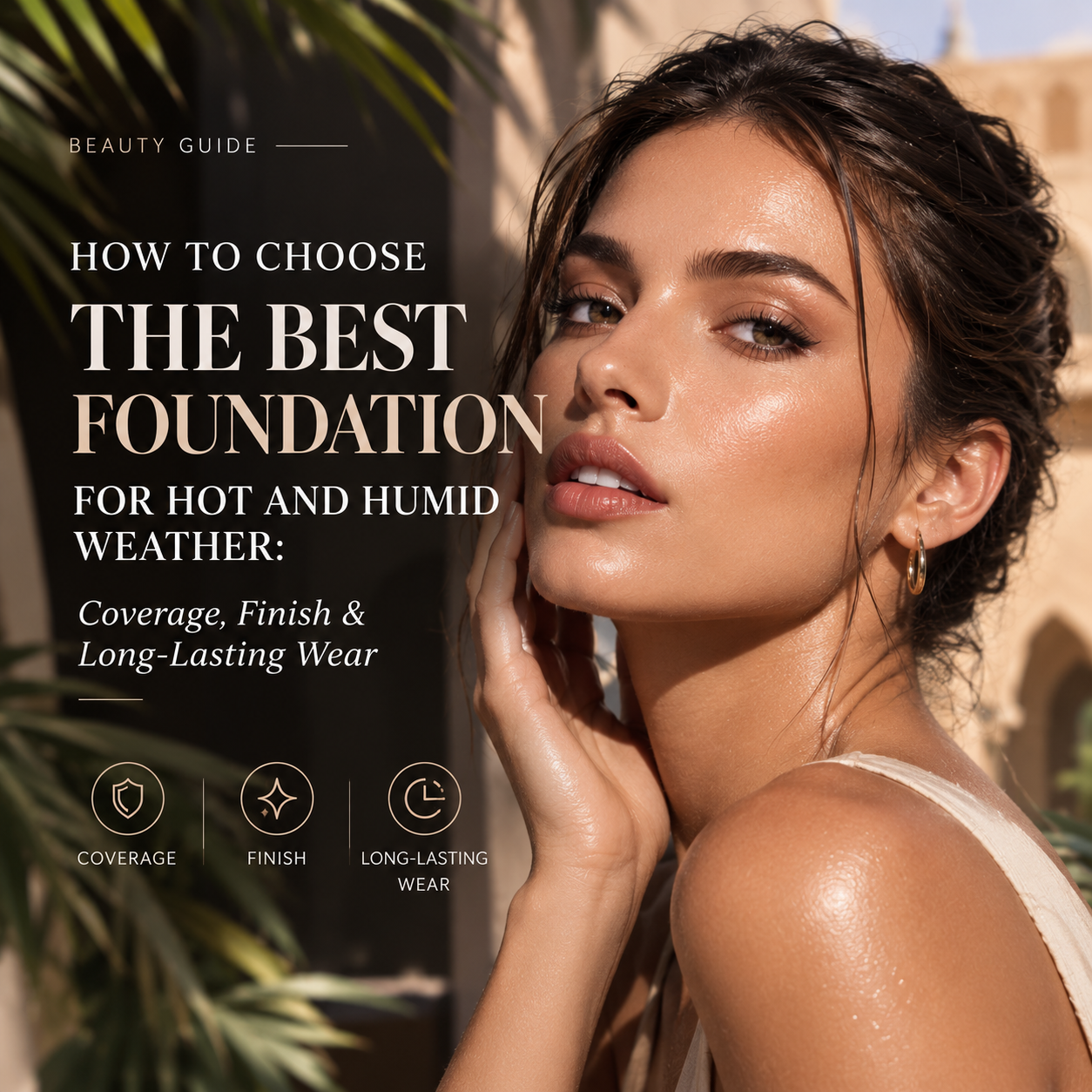
How to Choose the Best Foundation for Hot and Humid Weather: Coverage, Finish & Long-Lasting Wear
Choosing the right foundation can be challenging when you live in a hot and humid climate.
High temperatures, humidity, sweat, and excess oil can cause foundation to become shiny, patchy, cakey, or fade throughout the day. This is especially important for consumers in Southeast Asia, the Middle East, and many African markets, where makeup needs to perform comfortably in warm conditions.
So, what makes a good foundation for hot and humid weather?
The answer is not simply “the most matte foundation.” Instead, you need to consider texture, coverage, finish, adhesion, oil control, and long-lasting performance.
In this guide, we'll explain how to choose the right foundation for hot weather and how to build a more reliable long-lasting makeup routine.
Looking for the basics first? Read our previous guide: How to Choose Makeup for Hot and Humid Climates.
1. Choose a Lightweight Foundation Texture
When temperatures rise, heavy foundation can feel uncomfortable on the skin.
A thick formula may also become more noticeable when combined with sweat and oil, making the complexion look cakey or uneven.
For hot and humid climates, look for a foundation with a texture that is:
Lightweight
Smooth
Easy to blend
Comfortable on the skin
Easy to build in thin layers
Able to adhere evenly to the skin
A lightweight texture does not necessarily mean low coverage. A well-formulated foundation can provide buildable coverage while maintaining a more natural-looking finish.
For everyday makeup, HEREIAM's Oil-Free Liquid Foundation is a practical option to consider when creating a lightweight base.
2. Consider Oil Control Without Over-Drying the Skin
Excess oil is one of the biggest concerns when wearing foundation in hot weather.
As the day gets warmer, oil can break down makeup and create unwanted shine, particularly around the forehead, nose, and cheeks.
However, choosing an extremely dry matte foundation is not always the best solution.
A foundation that feels excessively dry may emphasize skin texture and make the complexion appear less natural.
Instead, look for a balance between:
Oil control + comfortable wear + natural-looking skin.
This balance is particularly important for customers who wear makeup for long working days, outdoor activities, travel, or social occasions.
3. Choose the Right Coverage Level
Foundation coverage should match the customer's needs—not simply be as high as possible.
Light Coverage
Light coverage is suitable for customers who prefer a natural “your skin but better” look.
It can work well for:
Everyday makeup
Casual occasions
Minimal makeup looks
Customers who prefer a lightweight feel
Medium Coverage
Medium coverage provides a balance between natural skin and more visible complexion correction.
It can be useful for:
Office makeup
Daily wear
Uneven skin tone
Mild redness
Special occasions
High Coverage
High coverage is suitable for customers who want stronger complexion correction.
It can help create a more polished appearance for:
Events
Photography
Glam makeup
Visible blemishes
Uneven pigmentation
However, in hot weather, high coverage should still be applied strategically.
Instead of applying a thick layer across the entire face, use a thin overall layer and add additional coverage only where needed.
4. Don't Ignore Foundation Finish
The finish of a foundation can dramatically change how the final makeup looks.
For hot climates, three finishes are particularly common:
Natural Finish
A natural finish keeps some dimension in the complexion without looking excessively shiny or overly matte.
It can be a good choice for everyday makeup.
Soft Matte Finish
Soft matte makeup can help create a cleaner-looking complexion while reducing the appearance of excess shine.
It is especially appealing to customers who prefer a polished makeup look.
Radiant Finish
Radiant foundation creates a fresher and more luminous appearance.
However, in very hot and humid conditions, excessive radiance can sometimes look like unwanted oiliness.
For this reason, radiant foundation can be paired with targeted setting powder around areas that tend to become shiny.
5. Foundation Should Have Good Skin Adhesion
A foundation may have a beautiful texture when first applied, but its performance throughout the day is equally important.
Good adhesion helps foundation stay more evenly distributed on the skin instead of quickly separating or disappearing from high-movement areas.
When evaluating a foundation for warm climates, consider:
Does it spread evenly?
Does it sit smoothly on the skin?
Does it work well with primer?
Does it remain comfortable after several hours?
Does it maintain an even appearance?
Does it work well with setting powder?
These details can make a major difference in real-world makeup performance.
6. Use Primer Before Foundation
A good foundation routine starts before foundation is applied.
Primer can help prepare the skin and create a smoother surface for makeup.
For customers concerned about visible pores or uneven texture, a smoothing primer can be particularly useful.
HEREIAM offers a Mousse Primer as part of its face makeup collection.
A primer should generally be applied in a thin layer and allowed to settle before foundation.
The goal is not to create a thick layer between skincare and makeup. Instead, use enough product to create a smoother base.
7. Apply Foundation in Thin Layers
One of the most common mistakes in hot-weather makeup is applying too much foundation.
More product does not automatically mean better coverage or longer wear.
Instead, try this method:
Step 1: Apply a small amount of foundation to the main areas of the face.
Step 2: Blend from the center of the face outward.
Step 3: Add a small amount to areas that need more coverage.
Step 4: Blend carefully around the nose, mouth, and hairline.
Step 5: Allow the foundation to settle before applying powder.
This technique can help create a more natural-looking base while avoiding unnecessary buildup.
8. Pair Foundation With the Right Concealer
If your foundation does not completely cover every imperfection, don't keep adding foundation.
Instead, use concealer selectively.
A high-coverage Concealer can be applied to areas such as:
Under the eyes
Around the nose
Blemishes
Dark spots
Redness
Areas with uneven pigmentation
This approach allows you to maintain a relatively thin foundation layer while adding coverage exactly where it is needed.
For hot climates, this can make the overall makeup feel lighter and more comfortable.
9. Set the Foundation With Loose Powder
Foundation alone may not be enough for a long day in hot weather.
Setting powder can help reduce unwanted shine and improve the stability of liquid or cream makeup.
For oily areas, apply a small amount of loose powder to the:
Forehead
Nose
Chin
Areas around the nose
Avoid automatically applying a heavy layer of powder across the entire face.
Too much powder can make the complexion look dry or emphasize texture.
HEREIAM's HD Loose Setting Powder can be incorporated into a long-lasting makeup routine.
For customers who prefer a stronger matte effect, the HD Matte Setting Loose Powder can also be considered.
The key is to use powder strategically rather than simply using more product.
10. How to Choose Foundation for Different Hot-Climate Markets
Not every warm-weather market has the same makeup needs.
Southeast Asia
Many Southeast Asian markets experience high temperatures and high humidity.
Customers may prioritize:
Lightweight textures
Oil control
Sweat-resistant performance
Natural or soft-matte finishes
Long-lasting makeup
A breathable-looking base combined with targeted setting powder can be a practical approach.
Middle East
Many Middle Eastern markets experience intense heat, but conditions can also be relatively dry.
Customers may therefore look for a combination of:
Long wear
Comfortable texture
Smooth application
Buildable coverage
Natural or soft-matte finishes
Rather than choosing the driest possible foundation, balancing longevity with comfort can be more effective.
Africa
African beauty markets are diverse, and customer preferences can vary significantly between countries and regions.
Shade range is therefore particularly important when developing a foundation assortment.
Retailers should consider offering:
A broad range of complexion shades
Different coverage levels
Different finishes
Complementary concealers
Setting powders
Blush and highlighter options
A broader complexion assortment can help retailers serve more customers instead of relying on a single foundation shade range.
11. Foundation Shade Selection Matters
A foundation can have excellent performance, but the wrong shade can still make the makeup look unnatural.
When choosing shades, consider:
Skin Depth
Offer shades across different complexion depths rather than focusing only on light and medium tones.
Undertone
Common undertones include:
Warm
Cool
Neutral
Some customers may also have olive or golden undertones.
Seasonal Changes
Customers who spend significant time outdoors may experience changes in skin tone throughout the year.
Having multiple shades available can make it easier to find a closer match.
For beauty retailers, a well-planned shade range can also improve customer satisfaction and reduce the risk of customers abandoning a purchase because they cannot find a suitable match.
12. A Simple Long-Lasting Foundation Routine
For hot and humid weather, try this simple sequence:
1. Skincare
Start with lightweight skincare and allow it to absorb.
2. Primer
Apply a thin layer of primer to smooth and prepare the skin.
3. Foundation
Use a small amount and blend evenly.
4. Concealer
Add coverage only where necessary.
5. Blush
Apply your preferred blush formula and blend carefully.
6. Setting Powder
Focus on oily areas and places where makeup tends to move.
7. Eye Makeup
Choose waterproof or smudge-resistant formulas when appropriate.
8. Final Check
Make sure the overall makeup layer remains light and comfortable.
This routine follows a simple principle:
Prepare → Apply Thinly → Add Coverage → Set Strategically.
13. What Beauty Retailers Should Look for in a Foundation
If you are a beauty wholesaler, distributor, retailer, or brand sourcing makeup for Southeast Asia, the Middle East, or Africa, product performance should be considered alongside commercial potential.
Before selecting a foundation for your product range, evaluate:
Formula
Is the texture suitable for warm climates?
Coverage
Does it meet the needs of your target customers?
Finish
Natural, soft matte, or radiant?
Wear Performance
Can the product maintain a consistent appearance over time?
Shade Range
Does the assortment cover enough complexion depths and undertones?
Packaging
Is it practical, attractive, and suitable for your target retail channel?
Price Positioning
Can the product provide a competitive value proposition?
Complementary Products
Can it be paired with concealer, powder, blush, and other products?
A strong foundation assortment should not be viewed as a single product.
It can become the center of a complete complexion makeup collection.
14. Build a Complete Complexion Collection
For retailers, one of the most effective ways to build a makeup category is to create a complementary product system.
For example:
Primer → Foundation → Concealer → Blush → Setting Powder → Highlighter
This gives customers a complete complexion solution while also creating opportunities for retailers to cross-sell related products.
For a wholesale beauty business, this approach can be particularly useful when developing product bundles or introducing a new makeup collection.
You can explore more products through the HEREIAM Face Makeup Collection.
Final Thoughts
The best foundation for hot and humid weather is not necessarily the thickest or most matte formula.
Instead, look for a combination of:
Lightweight texture + suitable coverage + comfortable finish + good adhesion + oil control + long-lasting performance.
For Southeast Asian markets, humidity and excess shine may be major concerns.
For Middle Eastern markets, long wear needs to be balanced with comfort in high temperatures.
For African markets, complexion shade diversity and flexible product assortments are particularly important.
Most importantly, foundation should work as part of a complete makeup system rather than as a standalone product.
With the right primer, foundation, concealer, setting powder, blush, and eye makeup, customers can create a more comfortable and reliable makeup look for warm climates.
And for beauty retailers and wholesalers, understanding these local needs can help create a product assortment that is more relevant to the customers you want to reach.
Next in our Hot-Climate Makeup Series:
Loose Powder vs. Pressed Powder: Which Is Better for Hot Weather?
Table of Contents
- How to Choose the Best Foundation for Hot and Humid Weather: Coverage, Finish & Long-Lasting Wear
- 1. Choose a Lightweight Foundation Texture
- 2. Consider Oil Control Without Over-Drying the Skin
- 3. Choose the Right Coverage Level
- 4. Don't Ignore Foundation Finish
- 5. Foundation Should Have Good Skin Adhesion
- 6. Use Primer Before Foundation
- 7. Apply Foundation in Thin Layers
- 8. Pair Foundation With the Right Concealer
- 9. Set the Foundation With Loose Powder
- 10. How to Choose Foundation for Different Hot-Climate Markets
- 11. Foundation Shade Selection Matters
- 12. A Simple Long-Lasting Foundation Routine
- 13. What Beauty Retailers Should Look for in a Foundation
- 14. Build a Complete Complexion Collection
- Final Thoughts