EN
EN
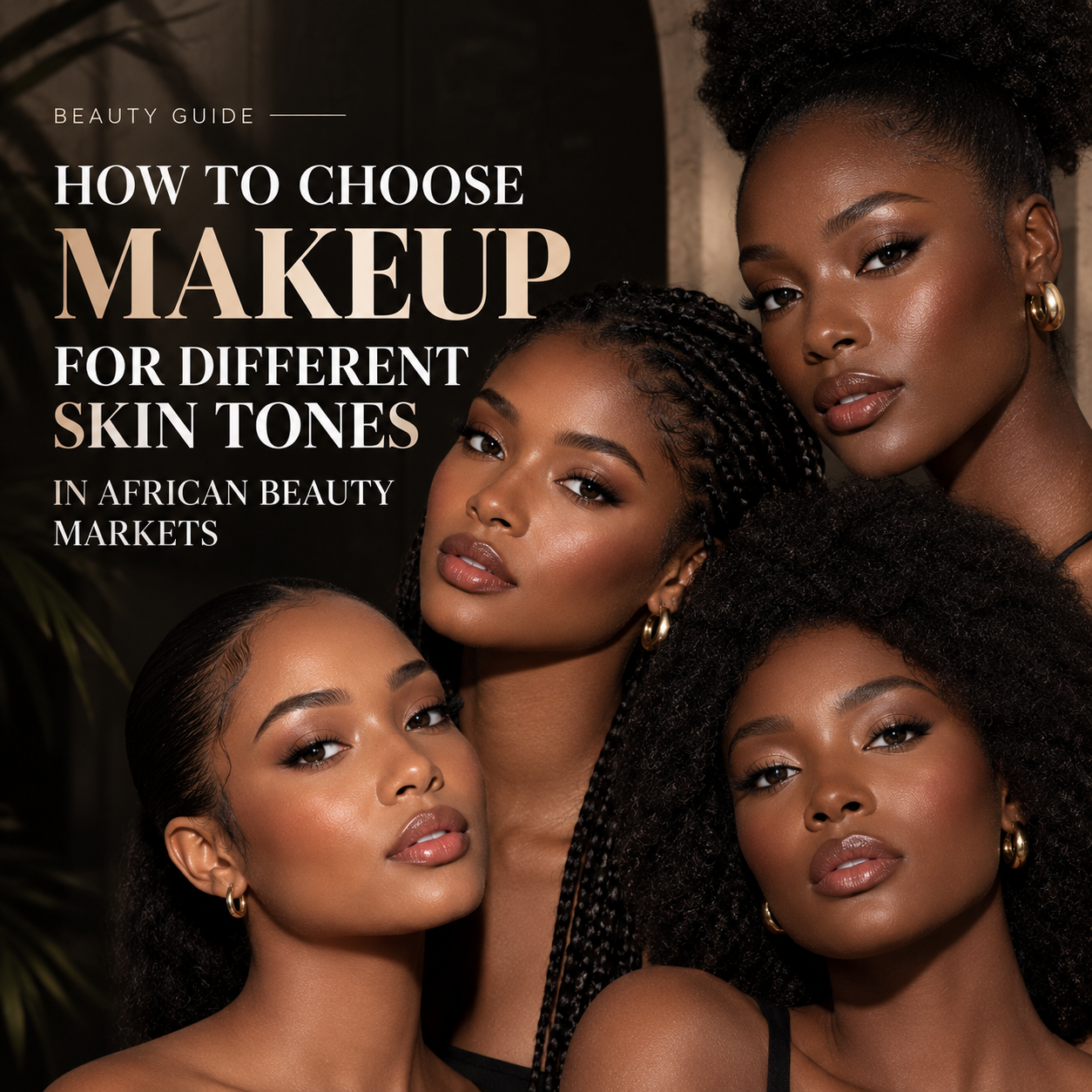
African beauty markets include a wide range of skin tones, undertones, makeup preferences, and local beauty trends. For beauty retailers and makeup users, choosing the right foundation, concealer, powder, blush, and lip colors is not simply about selecting “light” or “dark” shades.
A successful makeup routine starts with understanding skin depth, undertone, product finish, and climate.
For retailers, the same principle applies: a well-planned makeup assortment should offer enough shade flexibility and complementary products to serve different customer needs.
In this guide, we’ll look at how to choose makeup for African skin tones and how retailers can build a more practical complexion-focused makeup collection.
1. Understand Skin Depth Before Choosing Foundation
The first step in foundation selection is identifying skin depth.
Skin tones can range from fair and light to medium, tan, deep, and very deep. Within each depth, customers can also have different undertones.
This means two customers with a similar skin depth may still need different foundation shades.
When selecting a foundation range, consider:
Skin depth
Warm undertones
Cool undertones
Neutral undertones
Golden or olive undertones
Natural skin color versus tanned skin
Preferred makeup finish
For retailers, offering several complementary shades can make a collection more useful than relying on a single universal foundation shade.
Explore HEREIAM's Face Makeup Collection for complexion and face makeup options.
2. Pay Attention to Undertones
Skin depth tells you how light or deep the skin appears, while undertone describes the subtle color underneath the skin.
Common undertones include:
Warm Undertones
Warm skin often has golden, yellow, peach, or warm undertones.
Foundation with a suitable warm undertone can help create a more natural-looking base.
Cool Undertones
Cool undertones may have pink, red, or bluish characteristics.
A foundation with a cooler undertone can help balance the overall complexion.
Neutral Undertones
Some customers have a mixture of warm and cool characteristics.
Neutral shades can provide more flexibility when matching these complexions.
For African beauty markets, retailers should avoid treating “dark skin” as one single shade category. The range of undertones within deeper skin tones can be just as important as the depth itself.
3. Choose Foundation Based on Coverage and Finish
Shade matching is only one part of choosing foundation.
The formula also matters.
In warmer regions, customers may prefer foundations that feel lightweight while providing enough coverage for daily wear.
For example, an Oil-Free Liquid Foundation can be incorporated into a complexion-focused makeup routine when customers are looking for a lightweight base with a smooth finish.
When evaluating foundation, consider:
Coverage level
Texture
Finish
Oil control
Wear time
Comfort
Ease of blending
A retailer serving different African markets can consider stocking multiple foundation finishes rather than assuming every customer prefers the same makeup look.
4. Concealer Should Complement the Foundation
Concealer is another important product for complexion makeup.
Customers may use concealer to brighten the under-eye area, cover blemishes, or add additional coverage to specific areas.
However, concealer does not always need to be exactly the same shade as foundation.
For example:
A foundation shade can match the overall complexion.
A slightly brighter concealer can be used under the eyes.
A closer-to-skin-tone concealer can be used for blemishes.
A deeper shade can sometimes be used for contouring.
This creates more flexibility within a makeup collection.
For retailers, offering foundation and concealer together can also make it easier to build complete complexion-focused product assortments.
5. Setting Powder Is Important for Long-Lasting Makeup
In many African markets, climate can also influence makeup choices.
Hot temperatures, humidity, and perspiration can affect the appearance and wear of foundation.
That makes setting products an important part of a complete complexion routine.
A HD Loose Setting Powder can be used after foundation and concealer to help set the complexion.
For customers who prefer a more matte appearance, a HD Matte Setting Loose Powder can also be considered.
The key is not simply choosing the most matte product. Instead, consider the customer's skin type, preferred finish, and local climate.
For more information about choosing powder for hot climates, see our previous guide: [Loose Powder vs. Pressed Powder: Which Is Better for Hot Weather?].
6. Blush Should Complement the Overall Complexion
Blush can look very different depending on skin depth and undertone.
On deeper complexions, highly pigmented blush shades can provide stronger visible color payoff.
Depending on the desired makeup style, customers may explore:
Warm coral
Terracotta
Orange
Berry
Red
Rose
Plum
Deep peach
The right shade depends on the overall complexion, undertone, and desired makeup look.
For retailers, offering several blush color families can provide more flexibility than focusing on only one universally marketed shade.
You can also explore the HEREIAM Face Makeup Collection when building a broader complexion assortment.
7. Don't Forget Lip Color
Lip makeup is another area where customers can explore a wide variety of colors.
Different skin tones can work with many different lip color families, including:
Nude
Brown
Rose
Red
Berry
Plum
Orange
Deep burgundy
Rather than defining certain colors as suitable only for certain skin tones, customers can choose shades based on their desired makeup style.
For retailers, a broader lip color selection can help serve customers looking for everyday nude makeup as well as more dramatic evening looks.
Explore the HEREIAM Lip Makeup Collection for additional lip color options.
8. Eye Makeup Can Add Contrast and Definition
Complexion makeup is only one part of the complete look.
Eye makeup can be particularly important when customers want stronger definition or more expressive styles.
Depending on the desired look, retailers can consider stocking:
Neutral eyeshadow palettes
Warm brown shades
Gold and bronze tones
Deep matte shades
Colorful eyeshadows
Eyeliner
Mascara
For example, warm browns, bronze, gold, plum, and deeper neutral shades can all be incorporated into different makeup styles.
The important consideration is providing enough color variety for customers to create both everyday and statement looks.
Explore the HEREIAM Eyeshadow Collection for additional options.
9. Build a Complete Complexion Routine
Instead of thinking about products individually, it can be more useful to build a complete routine.
A basic complexion routine can include:
Step 1 — Primer
Prepare the skin and create a smoother base.
Step 2 — Foundation
Choose a shade that matches the customer's skin depth and undertone.
Step 3 — Concealer
Add targeted coverage or brighten selected areas.
Step 4 — Setting Powder
Set areas that need additional oil control or longer wear.
Step 5 — Blush
Add color and dimension to the cheeks.
Step 6 — Finishing Products
Complete the look with eye makeup and lip color.
This approach can also help beauty retailers create product bundles rather than selling complexion products separately.
10. Consider the Diversity of African Beauty Markets
Africa is not a single beauty market.
Customer preferences can vary significantly between countries, cities, climates, age groups, and beauty cultures.
For example, customers in different regions may have different preferences regarding:
Foundation coverage
Matte versus radiant finishes
Neutral versus colorful eyeshadow
Natural versus bold lip makeup
Everyday versus occasion makeup
Lightweight versus higher-coverage formulas
For wholesalers and retailers, this means product selection should be based on the specific target market rather than treating all African customers as one group.
A flexible assortment with different shades, finishes, textures, and color families can make it easier to adapt to different customer preferences.
11. A Practical Wholesale Makeup Assortment for African Markets
For beauty retailers looking to build a complexion-focused assortment, a practical product mix could include:
Complexion
Multiple foundation shades
Concealer
Loose setting powder
Matte setting powder
Primer
Color Makeup
Blush
Highlighter
Contour
Eyeshadow palettes
Eye Makeup
Eyeliner
Mascara
Brow products
Lip Makeup
Nude lip colors
Brown shades
Red and berry shades
Gloss and matte finishes
This type of assortment gives retailers more flexibility when serving customers with different skin tones and makeup preferences.
For wholesale buyers, HEREIAM Cosmetics provides IMAGIC brand stock products as well as ODM/OEM customization, allowing businesses to consider both ready-to-sell collections and customized product development.
12. Final Tips for Choosing Makeup for African Skin Tones
When selecting makeup for African beauty markets, remember these key points:
Don't treat deeper skin tones as one single shade.
Consider both skin depth and undertone.
Choose foundation based on shade, finish, and formula.
Use concealer strategically rather than assuming it must match foundation exactly.
Consider setting powder according to climate and skin type.
Offer blush and lip colors with enough pigmentation and variety.
Build complete complexion routines instead of focusing on one product.
Consider the specific country and customer segment you are targeting.
Give customers options rather than limiting them to one definition of suitable makeup.
For retailers, create flexible product assortments that can adapt to different complexion needs.
African beauty markets represent diverse customers with different complexions, preferences, climates, and makeup styles. Understanding this diversity can help both consumers and retailers make more informed product choices.
For more guidance on long-lasting makeup in warm climates, continue with our previous articles on [choosing makeup for hot and humid climates] and [how to make makeup last all day in humid weather].
Table of Contents
- 1. Understand Skin Depth Before Choosing Foundation
- 2. Pay Attention to Undertones
- 3. Choose Foundation Based on Coverage and Finish
- 4. Concealer Should Complement the Foundation
- 5. Setting Powder Is Important for Long-Lasting Makeup
- 6. Blush Should Complement the Overall Complexion
- 7. Don't Forget Lip Color
- 8. Eye Makeup Can Add Contrast and Definition
- 9. Build a Complete Complexion Routine
- 10. Consider the Diversity of African Beauty Markets
- 11. A Practical Wholesale Makeup Assortment for African Markets
- 12. Final Tips for Choosing Makeup for African Skin Tones